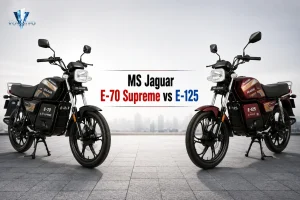
The PAVE Phase 2 E-Bike Scheme Pakistan is designed to make electric bikes more affordable through government support. The program helps eligible buyers reduce the upfront cost of approved electric bikes while encouraging wider EV adoption across the country. This complete guide covers eligibility criteria, subsidy details, required documents, application steps, and what buyers should know before choosing an electric bike.
This guide covers who qualifies, how much you save, the exact steps to apply, and how PAVE Phase 2 compares to the separate Punjab scheme people often mix it up with. At Volnivo, we track every electric bike scheme and price change in Pakistan, so the numbers here are current, not recycled from Phase 1.
PAVE Phase 2 E-Bike Scheme
If you just want the numbers: the PAVE Phase 2 e-bike scheme gives Rs 80,000 off an approved electric bike and up to Rs 400,000 off an electric rickshaw or loader. There’s no ballot this time; it’s first-come, first-served. You apply at pave.gov.pk, and there’s no fixed closing date. The window stays open until the vehicle quota runs out.
Program: PAVE Phase 2
Full form: Pakistan Accelerated Vehicle Electrification
Approved: May 5, 2026, by the Economic Coordination Committee
Budget: Rs 9 billion
Target: 76,000 e-bikes + 2,170 three-wheelers
Selection method: First-come-first-served
Status: Open now at pave.gov.pk
What Is the PAVE Phase 2 E-Bike Scheme?
PAVE stands for Pakistan Accelerated Vehicle Electrification. The PAVE Phase 2 e-bike scheme sits under the government’s National EV Policy 2025–30, and it’s run by the Engineering Development Board under the Ministry of Industries and Production.
Electric bikes cost more upfront than petrol bikes, even though they’re far cheaper to run day-to-day. The government pays part of that upfront cost directly to the manufacturer, so the price at the dealer is already reduced. A commuter in Lahore or Karachi can end up paying electricity costs of under Rs 500 a month, against Rs 4,000 to Rs 8,000 for petrol.
Part of the funding comes from a Rs 2.5 climate levy on every litre of petrol and diesel sold in the country. This is a government electric bike scheme that Pakistan residents are watching closely, since petrol buyers are effectively helping fund the shift away from petrol.
Phase 1 vs Phase 2: What Changed
Phase 1 didn’t go well. The government set a target of 41,000 vehicles, but banks were slow to process loans, and only about 5,400 electric bikes and rickshaws actually reached buyers; roughly 13% of the target. Out of 44,689 applications sent to banks, just 4,075 were approved.
The fix was to scrap the computerized ballot and switch to first-come, first-served. Anyone still waiting from Phase 1 gets priority, then new applicants are served in the order they apply. Here’s what actually changed:
- Selection method: computerized ballot → first-come-first-served
- Target: 41,000 vehicles → 76,000 e-bikes + 2,170 three-wheelers
- Applications vs. delivery: 269,149 applications in Phase 1, but only about 5,400 vehicles were actually delivered
- Categories covered: mostly e-bikes → e-bikes plus rickshaws and loaders
- Priority order: random draw → Phase 1 waitlist first, then new applicants by timestamp
PAVE Phase 2 Subsidy and Financing
How Much You Save
Electric bikes get a fixed Rs 80,000 e-bike subsidy, and electric rickshaws or loaders get up to Rs 400,000. The subsidy doesn’t come to you as cash; it goes to the approved manufacturer, who lowers the price you actually pay at the dealer.
| Vehicle Type | Subsidy | Financing |
|---|---|---|
| Electric bike (2-wheeler) | Rs 80,000 | 0% markup, 24–36 months |
| Electric rickshaw/loader | Up to Rs 400,000 | 0% markup, up to 36 months |
Self-Finance vs Installment
If you can pay the remaining balance upfront, you get the bike faster with no extra paperwork beyond the initial application, and there’s no monthly payment or bank involved. If not, partner banks offer 0% markup installments spread over 24 to 36 months, with a small or no down payment; the government covers the interest cost, not you. Self-finance suits buyers who already have the full amount ready; installment financing suits salaried or self-employed applicants who’d rather keep the upfront cost low.
Who Is Eligible for PAVE Phase 2?
The eligibility rules for the PAVE Phase 2 e-bike scheme are fairly open. You qualify if:
- You’re a Pakistani citizen with a valid CNIC, including residents of AJK and Gilgit-Baltistan
- You’re between 18 and 65 years old
- You haven’t already received a vehicle under any other government EV scheme, federal or provincial
- You hold a valid driving licence if you’re applying for a rickshaw or loader
Students, delivery riders, office workers, and small business owners across Punjab, Sindh, KP, and Balochistan can all apply. There’s no income bracket that shuts anyone out.
Documents You’ll Need
Before you start the online form, meeting the PAVE eligibility criteria means having these ready:
- Original CNIC and a copy
- Proof of income or employment
- Valid driving licence or learner’s permit (for rickshaws and loaders)
- Any category-specific document the portal asks for
Having everything scanned and ready before you register helps you avoid losing your place in the first-come, first-served queue.
How to Apply for PAVE Phase 2 Online
Applying for the PAVE Phase 2 e-bike scheme is a fairly quick online process once your documents are ready. You can apply for PAVE online in a few steps:
- Go to pave.gov.pk and register with your CNIC and mobile number.
- Pick self-finance or installment, and choose a partner bank if you’re financing.
- Select an approved manufacturer and model from the portal’s list.
- Upload your documents for verification.
- Wait for approval; you’ll get an SMS or email notification.
- Collect your bike from an authorized dealer once everything’s confirmed.
Applying early actually matters now. Under the old ballot system, day one and day thirty had the same odds. Under first-come-first-served, your timestamp decides your place in line.
When Does PAVE Phase 2 Close? (Last Date Explained)
There’s no fixed calendar deadline for the PAVE Phase 2 e-bike scheme. It closes the moment the 76,000-bike and 2,170-rickshaw quota fills up, not on a set date. That’s a real change from how most government schemes work, and it’s also why applying sooner rather than later makes a practical difference.
One mix-up worth clearing up: this isn’t the same scheme as Punjab’s CM E-Bike Scheme, which does have an announced deadline of its own.
PAVE Phase 2 vs CM Punjab E-Bike Scheme
People in Lahore and Rawalpindi often ask if PAVE and the Punjab scheme are the same thing. They’re not; the PAVE Phase 2 e-bike scheme is a federal program available nationwide, while the CM Punjab scheme is a separate provincial program aimed mainly at students.
| Feature | PAVE Phase 2 | CM Punjab Scheme |
|---|---|---|
| Government level | Federal | Provincial (Punjab only) |
| Subsidy | Rs 80,000 | Roughly Rs 90,000 (installment-based) |
| Deadline | None quota-based | October 4, 2026 |
| Target audience | All citizens, 18–65 | Mainly students |
| Coverage | Nationwide, plus AJK and GB | Punjab only |
For more details on the Punjab scheme itself, see our blog: Punjab E-Bike Scheme: 125,000+ Bikes With No Down Payment.
How to Choose the Right Electric Bike After Approval
Getting approved is only half the decision. Before you pick a model at the dealer, check:
- Battery type. Lithium-ion lasts longer than lead-acid, but costs more upfront
- Real-world range, not just the number on the brochure
- Charging time. Some bikes take 4 hours; others take closer to 8
- Warranty terms. On the battery and motor specifically
- Spare parts availability and how close the nearest service center is to you
Your daily distance matters too. A bike built for short city hops in Islamabad isn’t the right pick if your commute stretches out toward Rawalpindi and back every day.
Common Mistakes to Avoid
- Applying through unofficial or third-party websites instead of pave.gov.pk
- Waiting for a “deadline” that doesn’t actually exist
- Confusing PAVE with a provincial scheme like Punjab’s
- Picking a bike before confirming it’s on the approved model list
- Submitting incomplete documents, which pushes you back in the queue
Expert Tips
- Apply the same day you decide; the timestamp system rewards speed
- Confirm a dealer’s PAVE-approved status before you pay anything
- Compare self-finance and installment costs based on how you actually plan to ride, not just the sticker price
Conclusion
The PAVE Phase 2 e-bike scheme makes owning an electric bike realistic for many more people in Pakistan than Phase 1 ever did; the numbers alone show that. An Rs 80,000 subsidy, no ballot, and financing that doesn’t charge you interest add up to a genuinely good deal, if you go in prepared.
Once your subsidy comes through, the real decision starts: which bike actually fits how you ride. Volnivo compares electric bike models, prices, and specs across Pakistan, so you can make that call with real numbers instead of a dealer’s pitch. For the latest updates on this scheme, keep checking back on our website. PAVE details change often, and we update this guide as soon as they do.
FAQs
- What is the PAVE Phase 2 subsidy amount?
Rs 80,000 for an approved electric bike, and up to Rs 400,000 for an electric rickshaw or loader.
- Who is eligible for PAVE Phase 2?
Any Pakistani citizen aged 18 to 65 with a valid CNIC who hasn’t already received a vehicle under another government EV scheme.
- Is there a last date to apply for PAVE Phase 2?
No fixed date. The window closes once the 76,000-bike and 2,170-rickshaw quota is filled.
- Is PAVE the same as the CM Punjab E-Bike Scheme?
No. PAVE is a federal program open nationwide, while the CM Punjab scheme is separate, Punjab-only, and mainly for students.
- Which banks offer financing under PAVE Phase 2?
Partner banks include NBP, BOP, UBL, HBL, Meezan Bank, and BankIslami, among others.
- How do I check my PAVE application status?
Log in to your account at pave.gov.pk. Your dashboard shows your application’s current status.