First heavy shower of the season hits Lahore, and by evening, the same question’s already going around every scooter group chat. Can you actually ride an electric scooter in monsoon weather, or should it just sit parked till August’s over? Petrol bike guys don’t even think about it. Scooter owners do. And to be fair, it’s not a completely irrational worry.
Truth is, most electric scooties handle rain just fine. Not bulletproof, but fine enough that your regular commute in the wet isn’t going to break anything. What actually causes the damage comes down to a few specific habits that quietly cut into your battery’s life over time, and once you know what those are, riding an electric scooter in monsoon season stops feeling like you’re rolling dice every time you leave the house.
So, Is It Actually Safe?
Mostly. As long as the water doesn’t get deep enough to reach the battery pack or motor housing, you’re okay. Most scooties in Pakistan carry some kind of water resistance on the battery box and controller, usually somewhere between IP54 and IP67, depending on what you’re riding.
Here’s where people trip up, though: water-resistant and waterproof are not the same thing. A splash from a passing rickshaw or riding home in steady rain, that’s nothing. Riding through a flooded road with water past your footboard is a completely different situation, and that’s exactly where things start going wrong.
What Rain Really Does to the Battery
The battery’s the most sensitive part of the whole scooter, and also the most expensive thing to replace, so it’s worth understanding what’s actually happening when it gets wet, especially if you’re riding an electric scooter in monsoon season regularly.
It sits in a sealed casing, sure, but seals don’t last forever. They wear down, especially on older scooties or ones that have taken a fall or two. Once water finds a way past a worn seal, it starts corroding the terminals, and in the worst cases, causes a short. That’s really the whole reason checking your battery cover before the rains start is worth ten minutes of your time.
Lithium batteries generally take brief water exposure better than lead-acid ones, mostly because each cell is sealed on its own. Lead-acid batteries corrode around the terminals a lot faster if moisture keeps getting in.
The Problems That Actually Show Up
Ask any scooter mechanic what an electric scooter in monsoon season actually looks like, and you’ll hear the same handful of complaints over and over.
Short Circuits
The one everyone’s scared of. If water gets deep enough to hit exposed wiring or finds a crack in the battery casing, it can short things out. Doesn’t happen often on a well-maintained scooter, but it does happen, usually to someone who rode through water that turned out deeper than it looked from the road.
Wiring and Motor Issues
The motor itself is usually sealed well. The wiring running to it is not always on. Loose or exposed connectors are the actual weak point, and monsoon rain somehow always finds them.
Brakes That Don’t Grip Right
Not really a battery thing, just physics. Wet pads and wet tyres cut stopping power, especially on the drum brakes still common on cheaper models. People who don’t slow down for this end up needing a lot more road than they think they will.
Rust, Slowly
Frame, footboard hinges, and exposed screws- all of it takes a hit if the scooter sits wet without drying off. Doesn’t hurt you immediately, but it adds up over a couple of monsoons and shows up later when you’re trying to sell it.
Quick Check Before You Ride
A few minutes before heading out saves a much bigger headache down the road.
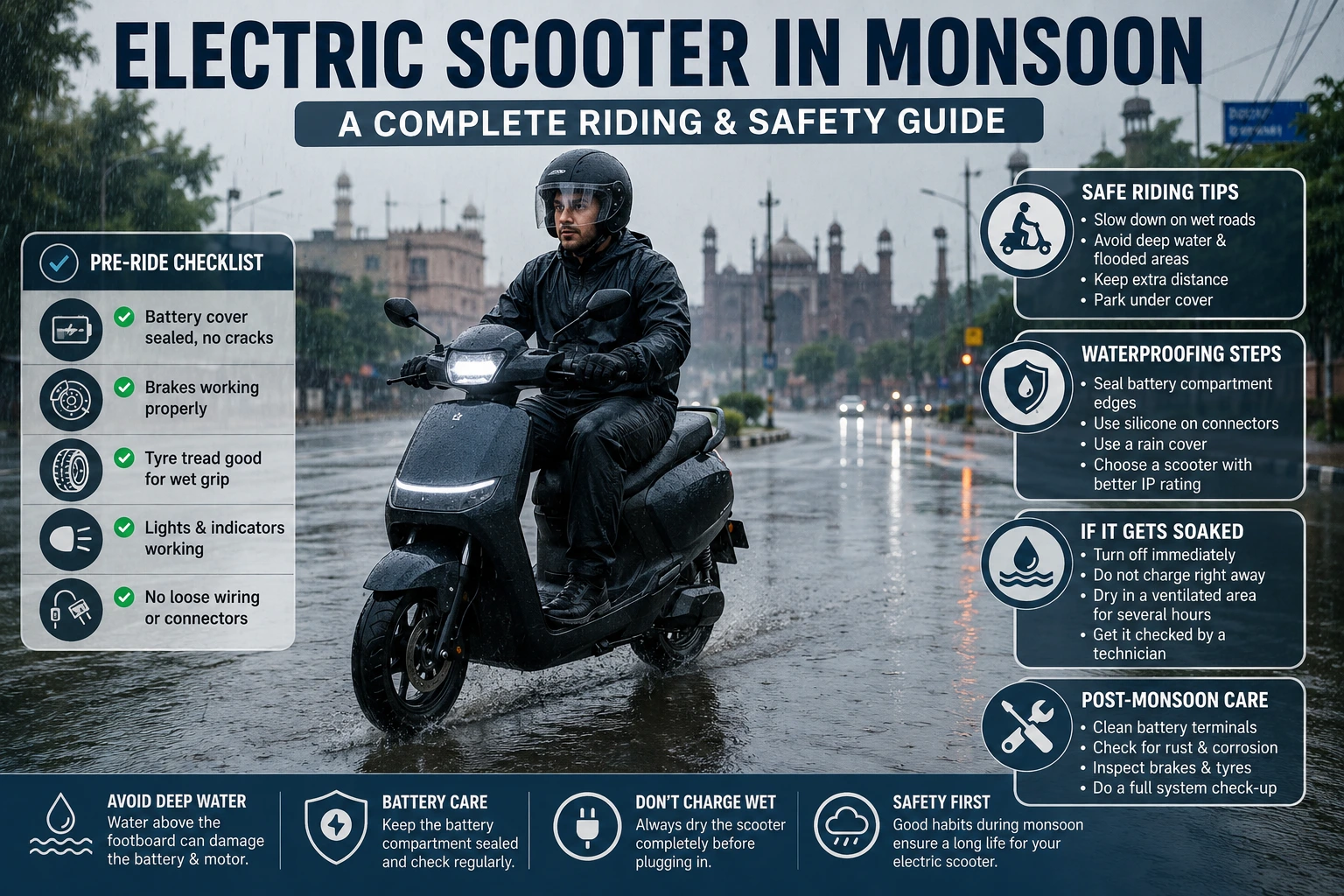
- Battery cover sealed, no cracks
- Brake pads and cables are not worn out
- Tyre tread still has grip; it matters more now
- Lights and indicators are working, but rain kills visibility fast
- No loose wiring near the handlebars or rear wheel
How to Actually Ride in This Weather
The riding matters as much as the build quality here.
- Slow down. Wet roads plus the instant torque on an electric scooter is a fast way to lose grip if you’re heavy on the throttle.
- Skip the flooded patches, even when three other bikes just went through. You can’t tell what’s under that water.
- Give more space to whoever’s ahead of you; stopping takes longer when it’s wet.t
- Park under cover when you can; don’t leave it sitting in the open rain for hours
- Got soaked? Let it dry first. Don’t plug it in right away
Protecting It Doesn’t Cost Much
Adding some protection for your electric scooter in the monsoon season isn’t expensive.
A silicone sealant around the battery compartment edges and connector joints is cheap, and most mechanics knock it out in under an hour. A basic rain cover helps a lot, too, if you don’t have covered parking. And honestly, if you’re buying new and riding daily, no matter the weather, just go with a model that has a better IP rating to begin with.
Not every scooter Handles Rain the Same.
Worth pointing out here: all scooties aren’t built equal when it comes to monsoon. The pricier models usually come with better-sealed battery boxes and a real IP rating from the factory, while the cheaper ones sometimes skip that to keep costs down. If you’re someone who’s out riding every monsoon no matter what, this is genuinely something to think about before you buy, not after you’re standing next to a flooded street wondering if you should’ve checked.
If It Gets Soaked
Rode through more water than you meant to, or got caught in a sudden downpour? Don’t panic, just be careful about the next steps.
Turn it off right away if anything feels off: flickering lights, sudden power loss, or any burning smell. Don’t charge it straight after heavy water exposure; give it several hours somewhere ventilated to dry out first. If the battery compartment went fully underwater at any point, get a technician to check it before riding again, even if it seems fine. That check is a lot cheaper than a new battery pack.
After the Season’s Over
Once the rains ease up, a proper check catches whatever slipped through during the wetter months.
Clean the battery terminals, look for early corrosion. Check the frame and hinges for rust, and spray something rust-preventive if needed. Get the brakes looked at, too. Pads wear faster after a season of wet riding. Small routine, but it buys the scooter a lot more years.
Conclusion
Riding an electric scooter in monsoon season doesn’t have to be the stressful thing people make it out to be, once you know what’s actually risky. Light rain and a normal commute are rarely an issue. The real trouble is deep water, worn-out seals, and charging a battery that’s still soaked. Check it before you ride, use some common sense around flooded roads, and give it a proper look after the season. The scooter will keep going long past the rain.
Not sure if your scooty’s okay after a heavy soak? Reach out to us directly, call +92 306-8492251, contact Volnivo, or visit us at Volnivo HQ, 123 Main Boulevard, Lahore, and we’ll help you figure out what to check before you ride it again.
FAQS
- Can I ride my electric scooter in light rain?
That’s usually not an issue for modern electric scooties as long as the battery compartment’s sealed properly. Just avoid deep puddles and slow down a bit.
- Does water damage void the scooter warranty?
Depends on the battery brands and how bad the damage is. A lot of manufacturers won’t cover water damage if the scooter went through flooding or deep water, so check your specific warranty terms.
- How do I know if my scooter’s battery is water-resistant?
Check the IP rating on the spec sheet, usually somewhere between IP54 and IP67. The higher the second number, the better the protection against water.
- Can electric scooter batteries catch fire from water exposure?
Rare, but a short from water hitting exposed wiring can, in bad cases, lead to overheating. That’s the whole reason avoiding deep water and getting things checked afterwards actually matters.
- How long should I wait before charging a wet scooter?
Give it four to six hours minimum to air dry somewhere with airflow. If the battery compartment went fully underwater, get it checked by a technician before charging at all.