Anyone living in Pakistan knows the drill by now – the lights go out, the bill still shows up, and you start wondering if there’s a better way to handle it. For a lot of households, that “better way” has turned into solar panels paired with a proper battery backup. And once you start looking into that, the Lithium Battery Price in Pakistan is pretty much the first number you need before anything else makes sense.
Here’s the thing nobody tells you upfront: lithium isn’t the “fancy option” anymore. It’s becoming the normal one. Yes, you’ll pay more on day one than you would for an old-school battery. Ask around, though, and most people who’ve already switched won’t tell you it was a mistake.
So let’s actually get into it – what these batteries cost right now, why the price moves around so much, and how you avoid overpaying.
What’s the Lithium Battery Price in Pakistan Right Now?
Straight to the numbers, since that’s probably why you clicked.
Three things mostly decide what you pay: how much energy the battery holds, which brand made it, and the tech sitting inside it. Here’s roughly where things stand:
Current Price Table (2026)
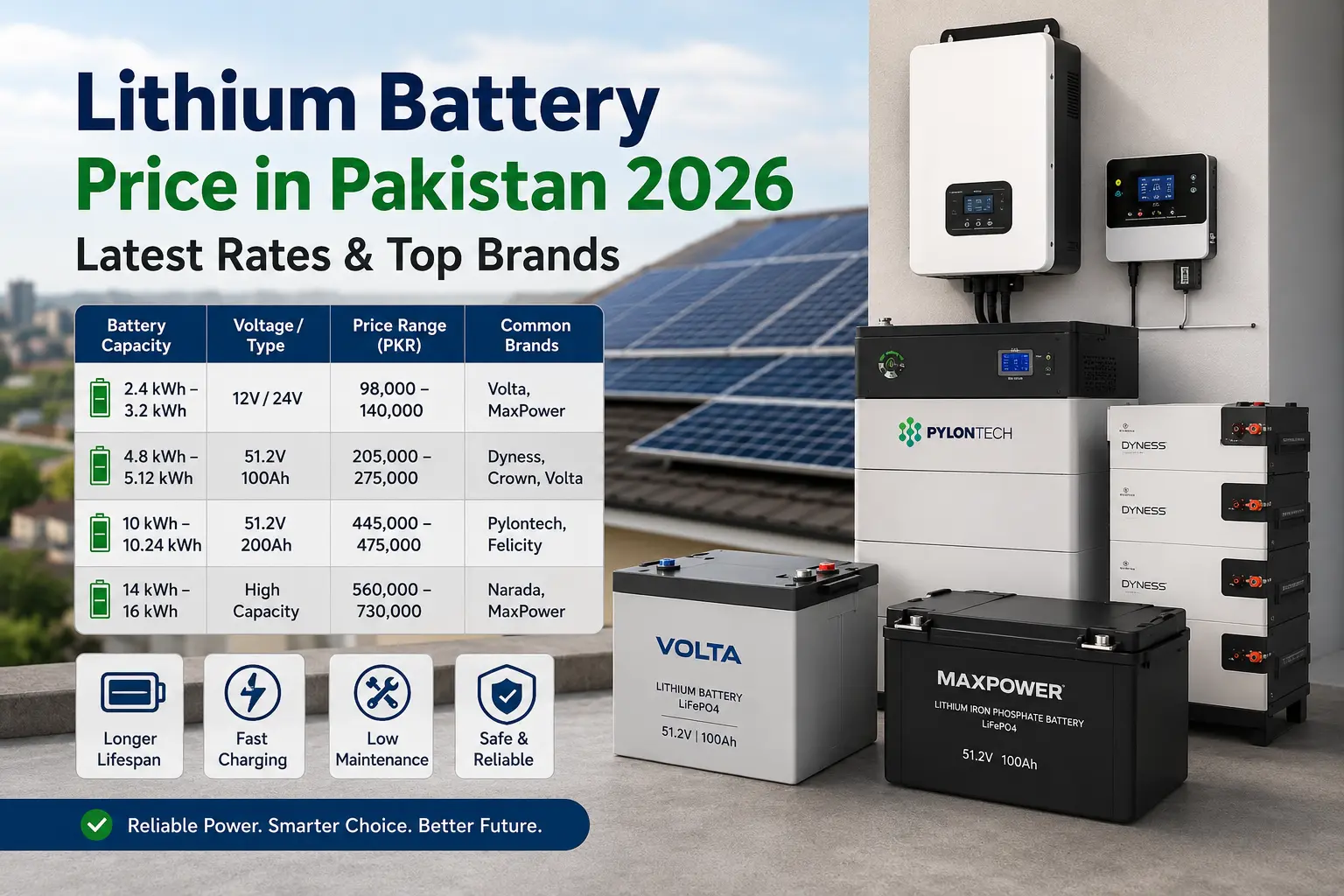
| Battery Capacity | Voltage / Type | Price Range (PKR) | Common Brands |
| 2.4 kWh – 3.2 kWh | 12V / 24V | 98,000 – 140,000 | Volta, MaxPower |
| 4.8 kWh – 5.12 kWh | 51.2V 100Ah | 205,000 – 275,000 | Dyness, Crown, Volta |
| 10 kWh – 10.24 kWh | 51.2V 200Ah | 445,000 – 475,000 | Pylontech, Felicity |
| 14 kWh – 16 kWh | High Capacity | 560,000 – 730,000 | Narada, MaxPower |
Most homeowners land on a 5kWh unit, somewhere around PKR 205,000 to 275,000 – that’s usually enough to get a normal household through an outage without stress. Bigger house, more appliances running? You’ll probably want to look at 10kWh or above instead.
Rough per-kWh math puts things at about PKR 35,000 to 55,000, though that swings depending on how solid the battery actually is.
Which Brands Actually Show Up in Pakistan’s Market?
Price is one thing. Who made the battery is arguably just as important, and honestly sometimes more, since brand reputation plays a big role in what you end up paying for the Lithium Battery Price in Pakistan.
A handful of names keep coming up in shops and online groups alike:
Talk to people who’ve installed solar systems and Pylontech or Narada tend to get mentioned as the more dependable picks. If your budget won’t quite stretch there, Inverex or Volta still do a decent job without breaking the bank.
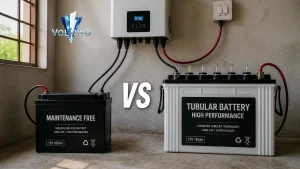
Lithium or Dry Battery – Does the Extra Money Make Sense?
This question comes up constantly. “Why not just grab a cheaper dry battery instead?”
Honestly? Fair question.
Upfront, the Lithium Battery Price in Pakistan sits higher than a dry battery. That part’s not up for debate.
But stretch the timeline out a bit and the picture flips. Lithium batteries generally run three to four times longer than dry ones, and you’re not dealing with the maintenance headaches that come with lead-acid setups.
Most people who make the jump don’t look back. Once you stop thinking about battery upkeep every few months, it’s hard to go back to a battery that demands attention.
What’s Actually Driving These Prices Up?
Let’s break this into pieces instead of throwing numbers at you, since understanding what moves the Lithium Battery Price in Pakistan up or down helps you spot a fair deal from an overpriced one.
- Capacity is the big one. More stored energy, higher price – it’s about that simple. A bigger household running more appliances will naturally need more capacity, but if your usage is light, there’s no reason to overpay for storage you’ll never use.
- Brand plays a real role too. Bigger names charge more, but they usually back it up with sturdier build quality and longer warranty periods. Spend a bit more now,w and you might end up spending less over the life of the battery.
- Then there’s the tech itself. Most batteries sold today use LiFePO4 chemistry – safer, more stable, and longer-lasting than what came before. That’s part of the reason prices sit where they do; you’re paying for engineering, not just a brand sticker.
- And don’t forget imports. Nearly every lithium battery sold here comes from outside Pakistan, so currency swings and import duties hit the price directly. A weak rupee this month can mean a different price tag next month, even for the exact same battery.
Picking the Right Size for Your Setup
Sizing a battery isn’t something to guess at, since going too small means running out of backup right when you need it most, and going too big just means paying for storage you’ll rarely touch. Getting the size right is also one of the easiest ways to keep the Lithium Battery Price in Pakistan reasonable for your actual needs. Here’s a quick way to match capacity to how you’ll actually use it:
Basic home backup? A 4-5kWh battery usually covers normal load shedding without issue.
Running solar? Go 5kWh or above if you actually want full-day coverage.
Office or heavy daily use? 10kWh or more is the safer call here.
These are starting points rather than hard rules, so it’s worth factoring in your actual appliance load before settling on a size. When in doubt, going one step up in capacity is usually a safer bet than trying to save money on something too small.
How Long Do These Things Actually Last?
Lifespan is really the whole pitch for lithium.
- Typical lifespan: 5 to 10 years
- Charge cycles: 2,000 to 5,000
That kind of durability is exactly why most buyers stop caring about the higher entry price after a year or two of use.
The Honest Pros and Cons
What works in lithium’s favor:
- Lasts a long time
- Charges quickly
- Basically zero maintenance
- Much lighter than lead-acid alternatives
Where it falls short:
- Costs more to buy initially
- Can lose some performance in extreme summer heat
A Few Buying Tips Worth Following
- Don’t pay for more capacity than you’ll actually use
- Push for a warranty of at least 3 to 5 years – don’t settle for less
- Buy from sellers with an actual track record, not just the cheapest listing
- Get two or three quotes before deciding – prices vary more than you’d expect
None of this takes much extra effort, but skipping it is usually how people end up overpaying.
Wrapping Up
Lithium’s quickly become the default choice for backup power in Pakistan, and once you look at what it actually offers, that’s not surprising. Better lifespan, less hassle, and performance that just holds up better over time.
Yes, the price tag stings a bit more upfront than a regular battery. But factor in the years you won’t spend topping up water or replacing a worn-out unit, and it starts looking less like an expense and more like a decision that pays for itself.
If you’ve been putting off upgrading your backup setup, 2026 isn’t a bad time to finally make the switch.
FAQS
- What does a 5kWh lithium battery cost in Pakistan?
Expect somewhere between PKR 205,000 and 275,000, though brand and warranty terms can push that number up or down.
- Which brand is actually the best pick here?
Pylontech, Inverex, and Narada all show up often in this conversation. None of them is universally “the best” – it really depends on your budget and how hard the battery will be working.
- Is spending more on lithium actually worth it?
For most people, yes. Less maintenance, longer life, better day-to-day performance – the higher price tends to pay for itself over time.
- Can lithium batteries work with a regular UPS?
Usually, yes, as long as your UPS is actually built to support lithium. Worth double-checking before you buy rather than assuming.