In April 2026, with petrol prices in Pakistan exceeding Rs. 450 per liter, Electric Scooter vs Petrol Cost in Pakistan has become a hot topic for daily commuters. Switching to an electric scooter (e-scooter) can reduce commuting costs to under Rs. 2 per km, offering huge monthly savings of Rs. 5,000–5,400 (over Rs. 64,000 annually) on fuel and maintenance. Starting from PKR 140,000, e-scooters provide a practical, eco-friendly, and high-efficiency alternative for city travel, making them a smart investment for anyone looking to cut transport expenses.
Beyond the immediate cost savings, electric scooters bring additional benefits such as low maintenance, zero emissions, and quiet operation. Unlike petrol bikes, they have fewer moving parts, require no engine oil or regular tune-ups, and charge easily at home. With urban traffic on the rise and petrol prices unpredictable, e-scooters in Pakistan are rapidly becoming the preferred choice for city commuters in 2026 and beyond.
Rising Fuel Prices in Pakistan: Why Costs Keep Increasing
Fuel prices have been on a constant upward trend in Pakistan due to global oil fluctuations, currency depreciation, and taxation policies. In April 2026, petrol crossed Rs. 450 per liter, directly affecting daily commuters, delivery riders, and small business owners who rely on two-wheel transport.
For example, a 30 km daily commute on a 70cc petrol bike can cost anywhere between Rs. 8–10 per km, totaling over Rs. 5,000 monthly. With rising inflation, these costs will only increase, making electric scooters a cost-saving necessity.
Additionally, rising petrol prices create uncertainty for households budgeting for transportation. Unlike petrol, electricity costs for charging e-scooters remain predictable, offering peace of mind for commuters.
Electric Scooter vs Petrol Bike: Monthly Cost Comparison in Pakistan
To understand real savings, let’s compare the electric scooter vs petrol cost in Pakistan for a 30 km daily commute using a standard petrol bike and an electric scooter.
| Cost Category | 70cc Petrol Bike | Electric Scooter | Savings |
| Running Cost/km | Rs. 8–10 | Rs. 1.7–2.1 | ~70–80% lower |
| Monthly Fuel/Electricity | Rs. 5,253 | Rs. 990 | Rs. 4,263 |
| Maintenance | High | Low | Avoids engine oil, spark plugs, and filter changes |
| Total Monthly Cost | ~Rs. 6,753 | ~Rs. 1,190 | Rs. 5,563 |
Key takeaway: Switching to an electric scooter can save over Rs. 5,500 per month, which is more than Rs. 66,000 annually.
Cost Per Kilometer: Electric vs Petrol Scooter in Pakistan
For daily commuters, the cost per kilometer can make a huge difference in monthly expenses. Understanding this helps you see why electric scooters are becoming a preferred choice in Pakistan.
- Electric scooter: Rs. 1.7–2.1 per km
- Petrol bike (70cc): Rs. 8–10 per km
This means every 10 km you ride, you save nearly Rs. 60–80. Over a month, these savings can easily reach Rs. 5,000–6,000 on fuel alone. On top of this, electric scooters also have lower maintenance costs and no oil changes, making them a more economical and practical option for city travel.
How Much Money Can You Save with an Electric Scooter in Pakistan?
Here’s a simple scenario to illustrate potential savings:
- Daily commute: 30 km
- Petrol bike monthly cost: Rs. 6,753
- Electric scooter monthly cost: Rs. 1,190
- Monthly savings: Rs. 5,563
- Annual savings: Rs. 66,753
If you include maintenance (oil changes, filter replacement, spark plugs), savings increase even further. With rising fuel prices expected in the next few years, these numbers are conservative estimates.
Initial Cost vs Long-Term Savings
When considering Electric Scooter vs Petrol Cost in Pakistan, it’s important to look beyond the initial price. While electric scooters have a higher upfront cost compared to some budget petrol bikes, they provide a quick return on investment thanks to low running and maintenance expenses.
- Basic electric scooters: PKR 140,000
- Premium models (e.g., Yadea Velax): PKR 380,000–430,000
- Payoff time: Less than 2 years for a daily commute of 30 km
The higher initial cost is quickly offset by monthly savings on electricity and minimal maintenance. Over time, e-scooters have become a highly cost-efficient and practical choice for daily urban commuting.
Petrol Price Hikes in Pakistan: Impact on Scooter Owners
Petrol price hikes affect every commuter in Pakistan, creating financial strain on households and small businesses. Unlike petrol bikes, electric scooters remain largely unaffected by fuel price volatility, offering stability and predictable costs. For many, this makes the transition to electric scooters not just attractive but necessary.
The continuous rise in petrol prices has pushed many two-wheeler users to rethink their daily travel budget. For delivery riders and office workers who depend on scooters for mobility, each fuel increase translates directly into reduced monthly income and higher living expenses. Some commuters now report spending nearly Rs. 7,000–8,000 per month on petrol alone, a figure that’s unsustainable for most middle-income households. Electric scooters, by contrast, provide a fixed, low-cost alternative that shields users from these unpredictable price hikes, making them a more stable choice during economic fluctuations.
Maintenance and Running Costs: Which One Is Easier to Afford?
When comparing electric scooters vs Petrol Cost in Pakistan, maintenance plays a major role in overall expenses. Petrol bikes require frequent servicing, including oil changes, spark plug replacements, filter maintenance, and occasional engine repairs. These costs add up quickly and can vary depending on the model and usage.
Electric scooters, in contrast, have far fewer moving parts, require no engine oil, and need minimal servicing. This low-maintenance nature not only reduces annual costs but also saves time and hassle for commuters. Over the long term, choosing an electric scooter can significantly ease both your wallet and your daily routine.
Environmental and Practical Benefits of Electric Scooters
When considering Electric Scooter vs Petrol Cost in Pakistan, the advantages go beyond just saving money; electric scooters also create a cleaner, quieter, and more efficient urban lifestyle.
- Zero emissions: Electric scooters produce no tailpipe emissions, helping reduce air pollution in cities like Lahore, Karachi, and Islamabad.
- Low noise: Near-silent motors significantly cut down noise pollution, making crowded city areas more comfortable.
- City-friendly design: Lightweight and compact, e-scooters are easy to park and maneuver in tight traffic.
- Eco-mode options: Many modern scooters include power-saving or eco modes that optimize speed and energy use to extend battery life.
- Lower carbon footprint: When charged using renewable or low-emission electricity, their overall environmental impact is far smaller than petrol bikes.
- Reduced heat generation: Unlike fuel engines that emit heat, electric scooters operate cooler, contributing to a more comfortable ride and less city heat buildup.
For daily commuters, these eco-friendly and practical benefits, combined with cost savings, make electric scooters a smart and sustainable mobility choice in 2026 Pakistan.
Battery Technology and Charging Costs
Modern electric scooters use advanced LiFePO₄ batteries, which are more heat-resistant, durable, and capable of thousands of charge cycles. A typical electric scooter consumes 1.5–3 kWh per full charge. At an average domestic electricity rate in Pakistan (Rs. 60/unit), charging costs:
- Rs. 90–180 per full charge, depending on the model
- Rs. 990–1,600 monthly for 30 km/day commuting
Charging can be optimized by:
- Using eco-mode
- Charging off-peak at night
- Maintaining proper tire pressure
- Avoiding aggressive acceleration
These measures further lower electricity consumption, ensuring maximum savings.
Lithium vs Dry Battery: Which Scooty is Best in Pakistan?
Electric vs Petrol Cost in Pakistan: Which One Is More Affordable in 2026?
When evaluating Electric Scooter vs Petrol Cost in Pakistan, the numbers speak for themselves. For a standard 30 km daily commute, the monthly expenses differ drastically:
- Electric scooter: ~Rs. 1,190 per month
- Petrol bike (70cc): ~Rs. 6,753 per month
This means that, on average, commuters save over Rs. 5,500 every month simply by switching to an electric scooter. Over a year, these savings exceed Rs. 66,000, and across five years, this can amount to hundreds of thousands of rupees, a significant financial advantage, especially when factoring in rising petrol prices and increasing urban traffic congestion.
The affordability of electric scooters isn’t limited to fuel costs alone. Maintenance is far lower since there’s no engine oil, spark plugs, or complicated mechanical parts to replace. Additionally, the reliability of modern LiFePO₄ batteries ensures fewer unexpected repair costs. Considering these factors, the cost of an electric scooter in Pakistan is not only cheaper every month but also offers predictable, long-term savings, making it the smarter choice for urban commuters in Pakistan in 2026.
Practical Use Cases: Who Should Buy an Electric Scooter?
Electric scooters are ideal for:
- Urban commuters: Quick, low-cost travel in cities like Karachi, Lahore, and Islamabad
- Students: Affordable transportation without high maintenance costs
- Delivery riders: Predictable running costs and reliable performance
They may be less suitable for:
- Long-distance travelers: High mileage beyond 150 km/day
- Rural areas: Limited charging infrastructure
For the majority of city users, an electric scooter provides rapid ROI, convenience, and cost predictability.
Future of Electric Mobility in Pakistan (2026–2027)
The electric mobility market in Pakistan is expected to grow rapidly:
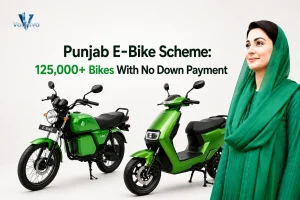
- Government incentives: Punjab E-Bike Scheme 2026 offers subsidies and financing options
- Infrastructure expansion: Charging stations are increasing in major cities
- Consumer adoption: More daily commuters and delivery services are switching to electric scooters
- Technology improvements: Advanced LiFePO₄ batteries, longer range, and faster charging
By 2027, electric scooters are likely to become a mainstream commuting option, reshaping urban mobility in Pakistan.
Charging Infrastructure: Making E-Scooters More Accessible
One of the main concerns for prospective electric scooter buyers is charging accessibility. Cities like Karachi, Lahore, and Islamabad are seeing a rapid expansion of EV charging stations, making electric scooter adoption easier. Companies are introducing home charging solutions, and commercial areas are adding dedicated charging points for delivery fleets. This growing infrastructure ensures that running an e-scooter is convenient and practical.
Safety Considerations for Electric Scooters
While electric scooters are low-maintenance and cost-effective, safety should never be compromised. Riders should:
- Always wear a helmet
- Observe traffic rules
- Avoid riding in wet or slippery conditions without proper tires
- Perform regular battery checks
- Use certified chargers only
These precautions ensure that the scooter remains reliable and safe for daily commuting.
Conclusion
Electric Scooter vs Petrol Cost in Pakistan shows that electric scooters are transforming urban commuting. With skyrocketing petrol prices, low running costs, minimal maintenance, and government incentives, they are an economical, eco-friendly alternative. For daily commuters, switching to an electric scooter is not just a trend but a financially sound decision in 2026.
By analyzing costs, savings, and practical benefits, it’s clear that electric scooters outperform petrol bikes in affordability, efficiency, and convenience. The future of urban mobility is electric, and the time to make the switch is now. For more information, contact us today.
FAQs
1. How much can I save monthly on an electric scooter compared to a petrol bike?
For a 30 km daily commute, an electric scooter costs around Rs. 1,190 per month, while a 70cc petrol bike costs approximately Rs. 6,753 per month. This difference means commuters can save over Rs. 5,500 monthly, which adds up to significant yearly savings of more than Rs. 66,000. Over a few years, this makes switching to an e-scooter financially very worthwhile.
2. What is the average cost per kilometer for an electric scooter in Pakistan?
The cost per kilometer for an electric scooter ranges from Rs. 1.7 to Rs. 2.1, whereas a petrol bike costs Rs. 8–10 per km. For regular city commuting, this represents savings of 70–80% per kilometer, making electric scooters a much more affordable option, especially in traffic-heavy urban areas like Karachi, Lahore, and Islamabad.
3. How long does it take to charge an electric scooter fully?
Most electric scooters take between 3 to 5 hours to fully charge, depending on the battery capacity and charger type. Smaller batteries charge faster, while larger batteries for long-range models can take up to 5 hours. Using off-peak electricity hours for charging can also reduce cost and strain on the grid.
4. Are electric scooters suitable for long commutes?
Modern electric scooters offer ranges from 60 km up to 220 km per charge, depending on the model. Riders with daily long-distance commutes can select high-capacity battery models to ensure uninterrupted travel. Additionally, most scooters allow partial charging, which can cover daily needs without fully charging every day.
5. What maintenance is required for electric scooters?
Electric scooters have very low maintenance needs compared to petrol bikes. There are no engine oils, spark plugs, or fuel filters to replace, and fewer moving parts reduce wear and tear. Routine checks for brakes, tires, and battery health are generally sufficient, making ownership easier and more cost-efficient.
6. Do electric scooters contribute to environmental sustainability?
Electric scooters produce zero tailpipe emissions, helping reduce air pollution in busy cities. They also generate less noise than petrol bikes, which improves the urban environment. When charged using renewable or low-emission electricity, the total environmental impact is significantly lower, making them a greener and more sustainable commuting option.
7. Are there government incentives for electric scooter buyers in Pakistan?
Yes, initiatives like the Punjab E-Bike Scheme 2026 offer subsidies, low-interest financing, and easier access for students and professionals. These programs aim to promote eco-friendly commuting and help buyers offset the initial cost of electric scooters, making them more accessible and financially viable for urban commuters.
8. How much electricity does an electric scooter consume?
Electric scooters typically use 1.5–3 kWh per full charge, depending on battery size. For a 30 km daily commute, this translates to approximately Rs. 900–1,600 per month in electricity costs. This is far lower than monthly petrol expenses, ensuring significant savings while keeping environmental impact minimal.
9. Which electric scooter model is best for city commuting?
For daily urban commuting under 50 km per day, compact and lightweight models like the Crown Electric Fairy or Metro M6 are ideal. These scooters are designed for city traffic, offer high efficiency, easy parking, and low electricity costs. They provide a practical and convenient alternative to petrol bikes for everyday riders.
10. Is switching to an electric scooter worth it in 2026 in Pakistan?
Absolutely. With soaring petrol prices, minimal maintenance, low running costs, and government incentives, switching to an electric scooter saves money, reduces environmental impact, and improves daily commuting convenience. Over time, the investment pays off while providing a cleaner, quieter, and more efficient ride in urban areas.