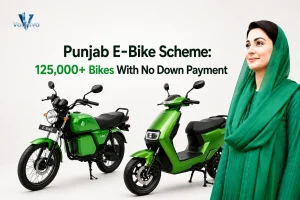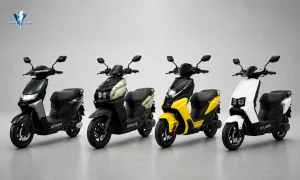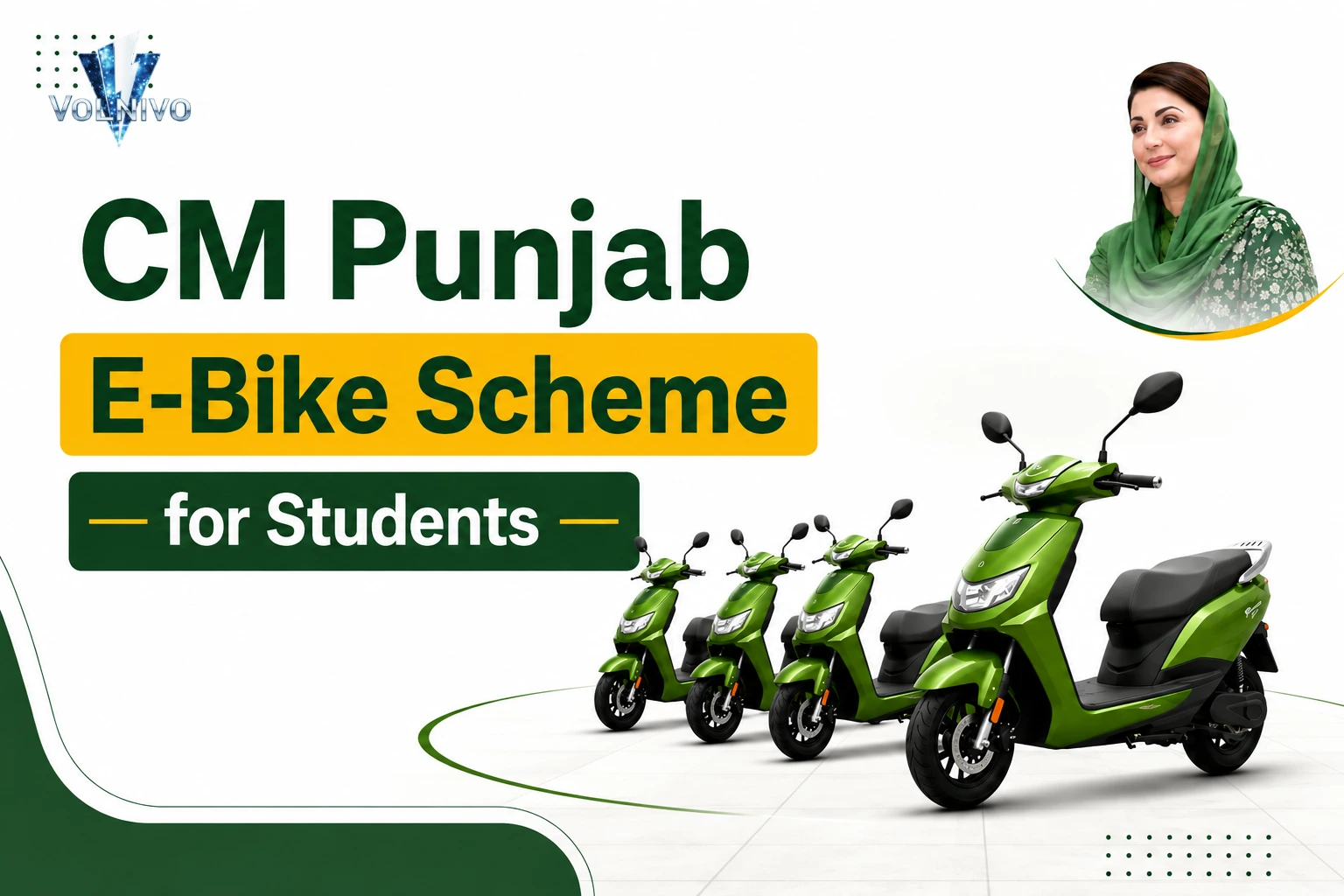
Getting to college every day costs money. Petrol prices keep climbing, and for a lot of students, that daily commute eats a real chunk of their monthly budget. The CM Punjab E-Bike Scheme was built to fix exactly that problem: a way to get an electric bike without paying full price upfront or dealing with any interest.
This guide covers everything you need before you apply: who qualifies, how much you’ll actually pay each month, which documents to prepare, why applications get rejected, and which electric bikes you can even pick from. No guesswork, no missing pieces.
What Is the CM Punjab E-Bike Scheme?
The CM Punjab E-Bike Scheme lets students in Punjab get an electric bike in Pakistan on easy monthly installments, with zero interest. The government pays the full loan markup and adds a Rs 70,000 subsidy to every bike, which brings the real cost down a lot.
It all runs through the Bank of Punjab, not private lenders, so there’s no risk of hidden fees or agents adding extra charges along the way. With petrol prices climbing every year, this scheme makes switching to electric an easy, affordable move for students who need it most.
Who Qualifies for the Scheme?
Before you start filling anything out, check these boxes first:
- You must be 18 or older
- You need to be a regular student at an HEC-recognized degree college or university
- You must hold a valid motorcycle learner’s permit or driving license
- Only one bike is allowed per household, even if more than one sibling applies
- You can’t already own a registered vehicle
Miss even one of these, and your application gets stuck at verification. Worth double-checking before you spend time filling the form.
For the full eligibility breakdown, see our Electric Bike Scheme Eligibility & Registration guide.
Money Breakdown: What You’ll Actually Pay
Here’s where the CM Punjab Electric Bike Scheme gets genuinely useful for students on a tight budget.
| Category | Down Payment | Monthly Installment | Interest |
| Male students | Rs 14,000 | Rs 2,100 | 0% |
| Female students | Waived | Rs 2,100 | 0% |
| Govt employees | TBA | TBA | 0% |
Female students don’t pay the down payment or the registration fee; the government covers both. But the monthly Rs 2,100 installment still applies to everyone, male or female. If you’ve seen posts claiming the bike is “completely free for girls,” that’s not accurate. The waiver is real, but it only covers the upfront cost, not the monthly payment.
Documents Required for the Scheme
Getting rejected over a missing document is the most avoidable mistake in this whole process. Keep these ready before you even open the portal.
For yourself:
- CNIC (both sides)
- Student ID and enrollment certificate
- Original or attested Punjab domicile
- Driving license or learner’s permit
- Two passport-size photos
- Bank account details
For your guarantor:
- Guarantor’s CNIC
- Proof of income (salary slip or business papers)
- A clean credit report, no defaults
- Recent utility bill
- Proof of relationship to you
Yes, you need a guarantor. A lot of first-time applicants don’t realize this until their application stalls. The Bank of Punjab may even visit your guarantor’s home to confirm their address, so brief them ahead of time.
How to Apply Online, Step by Step
- Go to the official portal: bikes.punjab.gov.pk. Nowhere else.
- Register using your CNIC and an active mobile number. Verify with the OTP sent to you.
- Fill in your institution name, enrollment number, and city.
- Upload clear, legible scans of every document listed above.
- Wait for Bank of Punjab verification; they’ll check your enrollment, domicile, and your guarantor’s credit history.
- If demand is higher than the bike quota, a computerized e-balloting round decides who gets selected. Results come by SMS and email.
- If selected, visit your assigned dealer to sign the agreement and collect your bike.
The entire process runs online, from start to finish. No office visits, no agents needed.
Why Applications Get Rejected
Every year, a chunk of applications gets turned down for reasons that have nothing to do with actually qualifying, just avoidable slip-ups at the form stage. Here’s what to watch for:
| What Goes Wrong | Fix It Like This |
| Documents scanned too dark or blurry to read | Use good lighting, and zoom in to check every scan before you upload it |
| The guarantor’s credit history has red flags | Have them pull their own credit report and clear any issues first |
| Enrollment info doesn’t match your student record exactly | Cross-check every field against your official enrollment certificate |
| No motorcycle license or learner’s permit on hand | Sort this out before you even start the application, not after |
| Applying through a random third-party website | Stick strictly to bikes.punjab.gov.pk, nothing else |
| Already own a registered bike or car | This scheme’s built for applicants with no existing vehicle, so ownership disqualifies you |
Run through this list before you hit submit. Catching one of these early can be the difference between getting selected and getting rejected on a technicality.
Is an Electric Bike Right for Your Daily Ride?
Before you pick electric over petrol, be honest with yourself about what your daily route actually looks like.
It’s probably a good fit if:
- You’re covering less than 25km each day
- Charging at home is easy and dependable
- Most of your riding stays within city limits
You might want to rethink it if:
- Your daily distance crosses 25km
- Power at home is unpredictable or frequently out
- You’re regularly heading out on long rural routes
The lower installment looks appealing, but it means nothing if you can’t charge the bike consistently. Match the bike to your actual commute, not just the monthly payment.
Real Running Cost: Electric vs Petrol
Numbers make this easier to picture than any general claim about “savings. A petrol bike burns roughly Rs 570 worth of fuel covering 60km in a day, at current prices. An electric bike covers that same 60km on about Rs 45 to 50 worth of electricity charged straight from a home socket overnight.
Here’s what that looks like stretched over a full month, assuming a daily 60km commute to campus and back:
| Timeframe | Petrol Bike | Electric Bike |
| Cost per day | ~Rs 570 | ~Rs 45–50 |
| Cost per month (30 days) | ~Rs 17,100 | ~Rs 1,350–1,500 |
| Annual fuel/charging cost | ~Rs 205,200 | ~Rs 16,200–18,000 |
That gap adds up fast. Over a month, the savings on charging alone can cover a big chunk of your Rs 2,100 installment, sometimes almost all of it, depending on how much you actually ride. And unlike a petrol bike, there’s no oil change, no engine servicing, and barely any moving parts to wear out, so the maintenance side stays cheap too.
The bigger the daily distance, the bigger this gap gets. A student riding 60km a day saves more in a single month than a Rs 2,100 installment costs, which is really the whole argument for choosing electric in the first place.
Final Verdict
The CM Punjab E-Bike Scheme genuinely solves a real problem: daily transport costs eating into a student’s budget. Rs 2,100 a month, zero interest, and a Rs 70,000 government subsidy are hard to beat if you qualify. Just don’t skip the guarantor step or rush your documents, since that’s where most applications actually fall apart.
Once you’re selected, take your time picking the right bike model, too; range and battery type matter more than looks for daily riding. Complete your registration through the official government portal to secure your electric bike, and if you need help comparing options before you apply, contact us today for more support and updates.
FAQs
- Is the CM Punjab E-Bike Scheme really interest-free?
Yes. The Punjab government pays the entire loan markup, so there’s no interest added to your installment. - Do female students pay anything upfront?
No down payment and no registration fee; both are covered by the government. The Rs 2,100 monthly installment still applies. - Can I pay off my installment early?
Yes, with no penalty, as long as you coordinate the early payoff with the Bank of Punjab in advance. - What if I already own a motorcycle?
You won’t qualify. This scheme is only for students and employees with no existing registered vehicle. - Can private university students apply?
Yes, as long as your institution is HEC-recognized and you meet the other eligibility conditions.
```html