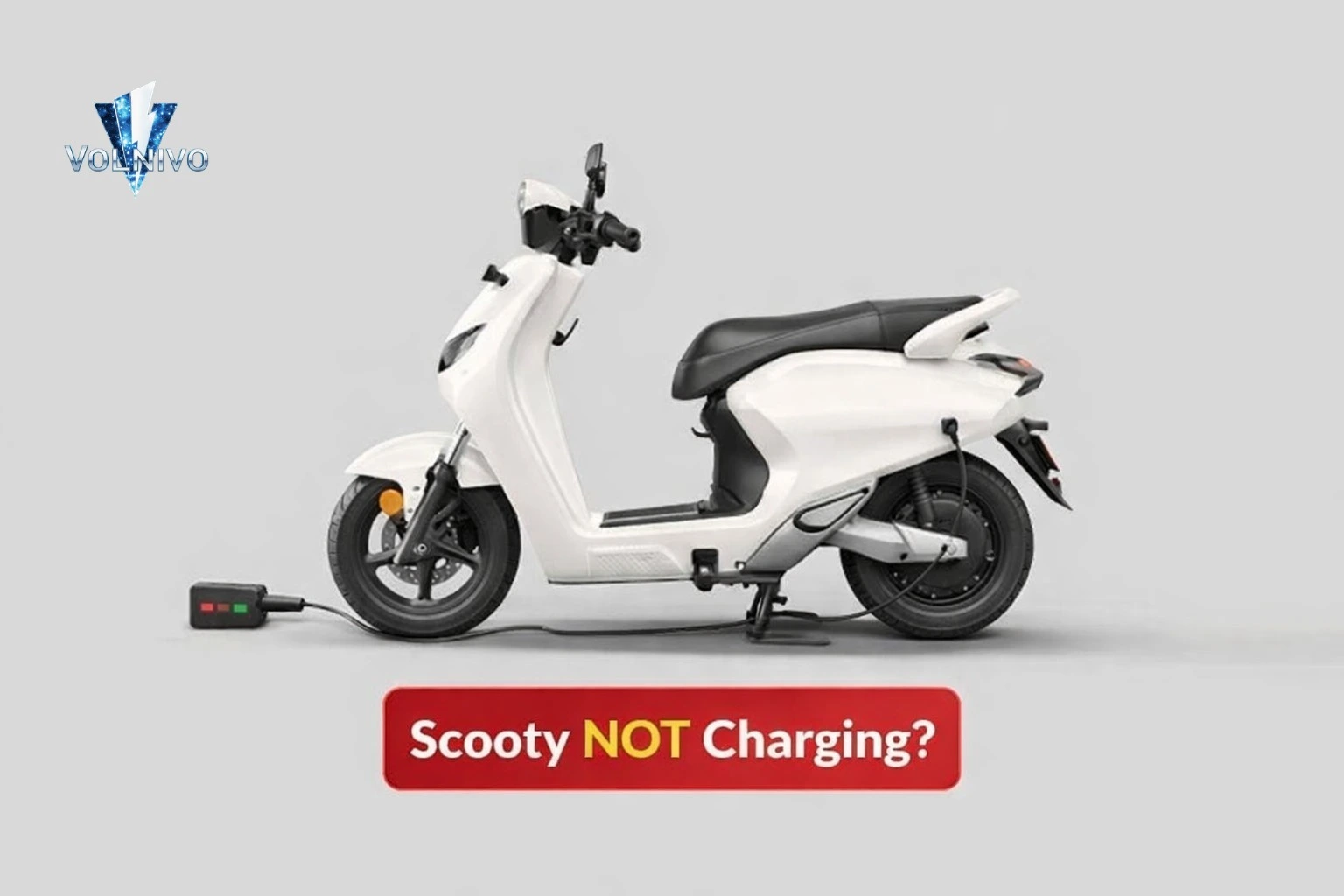
Scooty not charging is a problem every electric scooter rider can face at any time. You plug in your scooty, wait for it to charge, but nothing happens. No light, no power, and no response. It can feel frustrating, especially when you depend on your scooty for daily travel.
This issue is becoming more common in electric scooters in Pakistan due to heat, voltage changes, dust, and regular usage habits. Students, office workers, and delivery riders rely on these scooters every day, so even a small charging issue can disturb their routine.
The good thing is that most of the time, this problem is not serious. It can usually be fixed with simple checks and basic care.
Table of Contents
- What does scooty not charging mean?
- Quick basic checks
- 7 main reasons for charging failure
- Pakistan-specific charging problems
- Step-by-step troubleshooting guide
- Problem vs solution table
- Do’s and don’ts for battery care
- Common myths about scooty charging
- When you should worry?
- Conclusion
- FAQs
What Does Scooty Not Charging Mean?
When your scooter is not charging, it means the battery is not accepting electricity from the charger. You plug it in, but nothing happens, or charging does not start properly. Sometimes the charger light turns on, but the battery still does not charge.
In other cases, there is no light at all. Both situations point to different issues inside the system. Understanding this problem helps you fix it faster instead of guessing or spending money on unnecessary repairs.
Quick Basic Checks First
Before you start worrying about a serious problem, take a few minutes to check the basics. Many charging issues come from small mistakes that are easy to fix but often ignored.
- Is the wall socket working properly?
- Is the charger plugged in correctly?
- Is the charger light ON or OFF?
- Is the charging switch properly connected?
Many people ignore these simple checks and assume there is a big issue with the battery. But in many cases, the problem starts here and can be fixed in just a few minutes.
Main Reasons Your Scooty Is Not Charging
Charging issues do not always mean a major fault. In most cases, they are caused by small technical problems that can be identified and fixed easily. Understanding these reasons step by step will help you diagnose the issue more accurately and avoid unnecessary repairs.
1. Faulty Charger
A faulty charger is one of the most common causes of charging failure. Over time, internal wires can become damaged, or the adapter may stop functioning properly due to heat exposure or an unstable power supply.
Signs:
- The charger light does not turn on
- The charger becomes unusually hot during use
- Charging starts and stops intermittently
Fix:
Test the charger using a different power socket or try a compatible charger. If the issue persists, replacing the charger is usually the most effective solution.
2. Charging Port Blocked or Dirty
The charging port is a sensitive part of the scooter and is often exposed to dust, dirt, and moisture. In Pakistan, this issue is very common due to dusty roads and outdoor parking conditions. Even a small amount of dirt can block proper contact between the charger and the battery.
Signs:
- Loose or unstable charging connection
- Charging starts and stops frequently
- The charger plug does not fit properly into the port
Fix:
Clean the charging port gently using a dry brush, soft cloth, or air blower. Avoid using water or metal objects, as they can damage the internal pins.
3. Blown Fuse (Voltage Issue)
A blown fuse is another common reason why a scooter stops charging. Sudden voltage fluctuations, which are common in Pakistan, can damage the fuse inside the battery system. Once the fuse is blown, the power flow is completely interrupted.
Signs:
- No charging response at all
- The battery shows no activity
- Charger appears to work, but the scooty does not respond
Fix:
Check the fuse located near the battery compartment and replace it with the correct rating. If you are unsure, it is better to get it checked by a technician.
4. Battery Overheating
Battery overheating is a common issue, especially during hot weather or after long rides. When the battery temperature rises too high, the system automatically stops charging to protect internal components.
Signs:
- Charging does not start immediately after use
- Battery feels warm or hot to the touch
- Charging begins only after some time
Fix:
Allow the scooty to cool down for at least 1–2 hours before charging. Always try to charge your scooter in a shaded or cool environment.
5. Deep Discharge Battery
When a battery is left at 0% charge for an extended period, it can enter a deep discharge or protection mode. In this state, the battery may appear completely dead and may not respond immediately when plugged in.
Signs:
- No response when the charger is connected
- The battery appears fully drained
- Charging starts after a long delay
Fix:
Connect the charger and leave it plugged in for 12–24 hours without interruption. This allows the battery management system to slowly recover and restart the charging process.
6. Loose Internal Wiring
Loose internal wiring can occur due to continuous vibrations from rough roads. Over time, connections inside the scooty may become weak or disconnected, which can interrupt the charging process.
Signs:
- Charging stops suddenly without reason
- Connection works sometimes and fails at other times
- Battery performance feels unstable
Fix:
This issue requires internal inspection. If you are not experienced, it is best to have a technician check and secure the wiring properly.
7. Old or Weak Battery
Every battery has a limited lifespan. After regular use for 1 to 3 years, the battery gradually loses its ability to hold and receive charge efficiently. This results in slower charging and reduced performance.
Signs:
- Battery drains very quickly
- Charging takes longer than usual
- Scooty range becomes very low
Fix:
If the battery is old or significantly degraded, replacing it is the most effective solution to restore proper performance.
Is Your Electric Scooter Battery Draining Fast? 7 Easy Fixes
Why This Problem Is More Common in Pakistan?
Charging issues are not always caused by faults in the scooty itself. In many cases, external conditions play a major role in affecting battery performance and charging efficiency.
In Pakistan, certain environmental and electrical factors make these problems more frequent and harder to avoid.
Voltage fluctuations in homes
In many areas, unstable electricity supply can affect how your scooty charges. Sudden voltage ups and downs can damage the charger or internal battery system over time. This is one of the hidden reasons behind scooty not charging, especially in homes without proper voltage protection.
Extreme summer heat
High temperatures in Pakistan, especially during summer, can directly impact battery performance. When the battery gets too hot, it may stop accepting a charge as a safety measure. This makes charging slower or completely unresponsive in some cases.
Dust and humidity
Dusty environments and humidity can affect the charging port and internal components. Over time, dirt can block proper connections, while moisture can cause damage. These environmental factors quietly contribute to charging issues.
Load shedding
Frequent power outages can interrupt the charging cycle and affect battery health. When charging is not consistent, the battery may not perform properly, which can lead to long-term issues and unreliable charging behavior.
Low-quality chargers in the market
Using low-quality or incompatible chargers is a common issue. These chargers may not provide stable voltage or proper output, which can harm the battery and reduce charging efficiency. This often results in repeated charging problems over time.
Step-by-Step Troubleshooting Guide
If your scooter is not charging, follow these steps in order to quickly identify and fix the issue:
- Check charger and socket: Make sure the power outlet is working, and the charger is properly plugged in from both ends.
- Inspect charging port: Look for dust, dirt, or a loose connection that may block proper charging.
- Let the battery cool down: If the scooter was recently used, allow it to rest before charging.
- Try another charger: Use a compatible charger to rule out charger-related problems.
- Wait for deep discharge recovery: Leave the scooty plugged in for some time if the battery was fully drained.
- Check fuse: Inspect and replace the fuse if there is no power response.
- Inspect wiring (if needed): Check internal connections if the issue continues after basic steps.
This simple step-by-step process helps resolve most charging problems without the need for major repairs.
Problem vs Solution Table
Understanding common problems and their causes can help you fix charging issues quickly without confusion. The table below gives a simple overview of the most frequent issues and their practical solutions.
| Problem | Cause | Solution |
| No charging | Charger fault | Replace the charger |
| Slow charging | Battery issue | Check battery health |
| No response | Fuse issue | Replace the fuse |
| Charging stops | Loose port | Clean or fix the connection |
By using this quick reference, you can easily identify the issue and take the right step without wasting time or effort.
Do’s and Don’ts for Battery Care
Taking proper care of your battery is very important if you want to avoid charging issues and extend its overall life. Small daily habits can make a big difference in performance and reliability.
Do’s
- Charge your scooty in a cool and well-ventilated place to prevent overheating.
- Always use the original charger to ensure stable and safe charging.
- Keep the charging port clean and free from dust or moisture.
- Charge your battery regularly instead of letting it stay unused for long periods.
Don’ts
- Do not overcharge the battery for long hours beyond the recommended time.
- Avoid draining the battery completely to 0% on a regular basis.
- Do not charge immediately after a ride; allow the battery to cool down first.
- Avoid exposing your scooty to extreme heat or direct sunlight for long periods.
Common Myths About Scooty Charging
Many people believe incorrect information about electric scooty batteries and charging habits. These myths often lead to poor maintenance and unnecessary worry. Let’s clear them up with simple facts.
Myth 1: Charging overnight is always better for the battery
Truth: Leaving your scooty on charge for too long can actually reduce battery life over time. It is always better to follow the recommended charging duration.
Myth 2: The battery is dead if it doesn’t charge immediately
Truth: In many cases, the battery is not dead. It may simply be in protection mode due to deep discharge or temperature conditions, and can start charging after some time.
Myth 3: Any charger can be used for charging
Truth: Using the wrong or low-quality charger can damage the battery and reduce performance. Always use a compatible and recommended charger.
Electric Scooters in Pakistan: Truth Behind the Hype
When You Should Worry?
Not every charging issue is serious, but there are certain warning signs that should not be ignored. If you notice any of the following problems, it may indicate a deeper battery or internal system fault.
- The battery does not charge even after being connected for more than 24 hours
- Charging stops again and again without any clear reason
- The battery becomes unusually hot during charging or use
- A burning smell or unusual odor comes from the battery area
- The riding range suddenly drops without any change in usage habits
If any of these signs appear, it is best to stop using the scooty temporarily and get it checked. These issues often point to more serious battery or system damage that may require professional attention.
Conclusion
Scooty not charging is a common issue, but in most cases, it is not serious. It usually happens due to simple reasons like a faulty charger, a dirty charging port, overheating, or battery protection mode. With basic checks and proper maintenance, you can often fix the problem at home without needing expensive repairs.
The key is to understand early warning signs and follow good charging habits. Taking care of your battery, using the right charger, and avoiding extreme heat can greatly improve performance and battery life.
If you need more information or help with your scooty charging issue, feel free to contact us anytime for guidance and support.
FAQs
1. Why is my scooty not charging?
A scooter may not charge due to issues with the charger, charging port, battery, or fuse. Sometimes, simple problems like loose connections or dust in the port can also stop charging. Checking these basics first usually solves the issue.
2. How do I fix a scooty not charging problem?
Start by checking the charger, socket, and charging port for any damage or dirt. Let the battery cool down if it was recently used. If the issue continues, try another charger or inspect the fuse and wiring.
3. Why is my electric scooter charging very slowly?
Slow charging usually happens due to a weak battery, a low-quality charger, or an unstable power supply. High temperatures can also affect charging speed. In some cases, the battery may be reaching the end of its life.
4. Can heat stop my scooty from charging?
Yes, extreme heat can temporarily stop charging as a safety feature in lithium batteries. The system prevents charging to avoid damage. Always allow the scooty to cool down before plugging it in.
5. How long does a scooty battery take to charge?
Most electric scooty batteries take around 4 to 8 hours to fully charge depending on the model and battery size. Using the correct charger ensures proper charging time. Overcharging should always be avoided.
6. What should I do if my scooty charger is not working?
First, test the charger in another socket to confirm if it is working. If there is no light or response, the charger may be faulty. In that case, replacing it with a compatible charger is the best solution.
7. Why does my scooty battery stop charging suddenly?
This can happen due to loose connections, overheating, or battery protection mode. The system may stop charging to prevent damage. It usually resumes after cooling or resetting the connection.
8. Is it safe to charge a scooty overnight?
It is not recommended to leave the scooty charging overnight regularly. Overcharging can reduce battery life over time. It is better to unplug it once it is fully charged.
9. How long does a scooty battery last?
A typical electric scooty battery lasts around 1.5 to 3 years depending on usage and maintenance. Proper charging habits can extend its life. Harsh weather and overuse can shorten battery performance.
10. When should I replace my scooty battery?
You should consider replacing the battery when it no longer holds charge, charges very slowly, or gives very low range. Frequent charging issues are also a sign of battery wear. A technician can confirm if replacement is needed.